

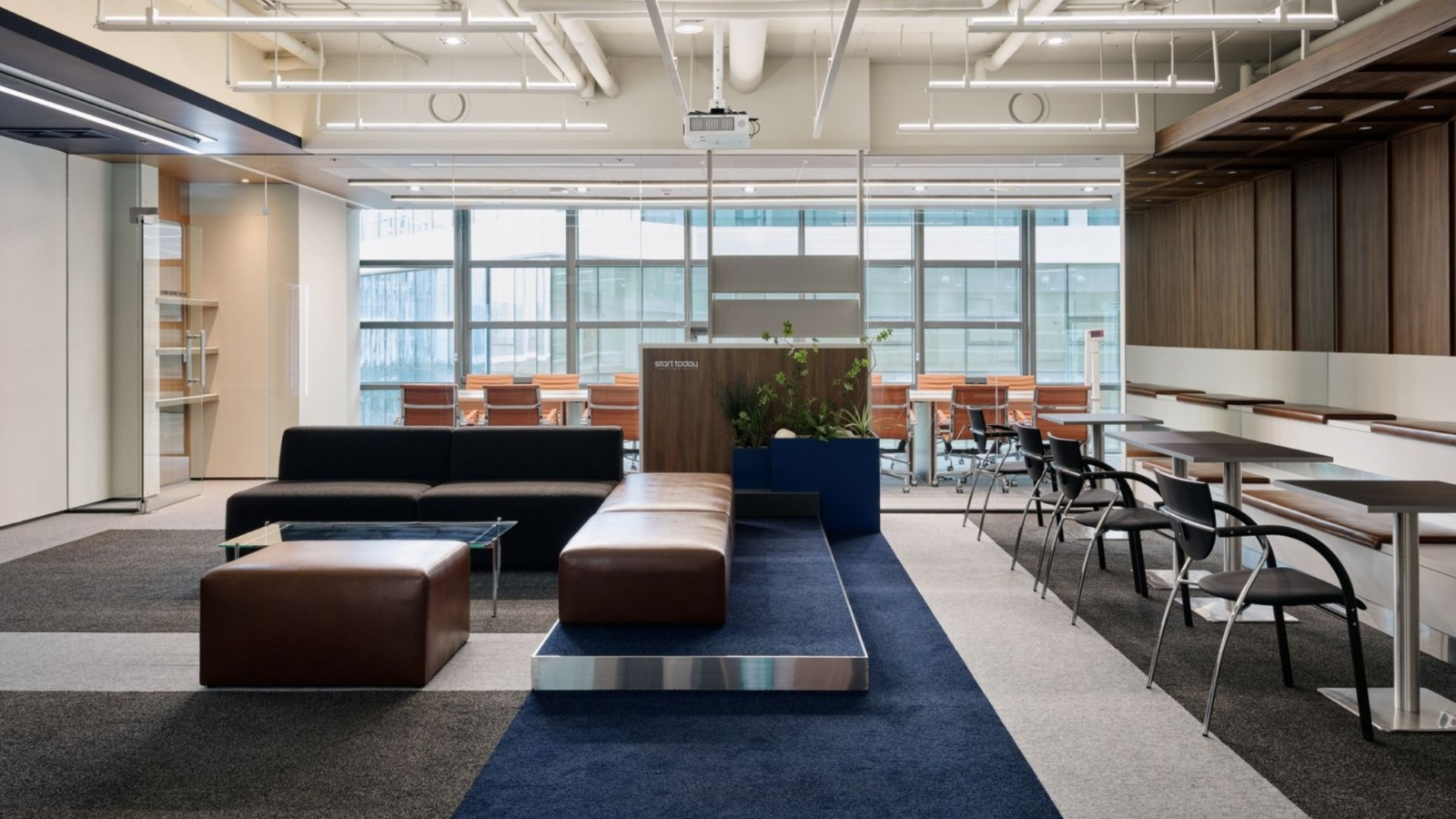

In 2025, office design is no longer just about aesthetics or functionality—it’s a powerful catalyst for how people feel, connect, and perform at work. The workplace is evolving into a rich ecosystem that blends innovation, culture, and human-centric design in extraordinary ways. If you’re starting from scratch, our complete guide to office interior design in 2025 offers essential planning insights before diving into new trends.
Here’s a deep dive into the top 10 revolutionary office design trends that transcend traditional rules and set your workspace apart this year.
1. Fluid Work Zones That Transform On-Demand
Create flexible workspaces that adapt to changing tasks and team needs, allowing employees to move between focused work, collaboration, and informal discussions throughout the day.
2. Immersive Biophilia Goes Beyond Green Walls
Think multi-sensory nature-inspired environments that go beyond plants and green walls. Incorporate natural materials, daylight, organic textures, and calming elements to create immersive retreats within the workplace.
3. Micro-Wellness Spaces for Instant Refresh
Mini wellness pods equipped for meditation, stretching, or quiet breaks can help employees recharge throughout the day. These spaces support well-being without requiring large dedicated rooms.
4. Hyper-Personalization Through Modular Decor
Employees customize their workspaces with modular furniture, adjustable lighting, personalized dashboards, and customizable accessories that make the workplace feel more personal.
5. AI-Driven Environmental Adaptation
Smart workplace systems can adjust lighting, temperature, and ventilation based on occupancy and environmental conditions, helping create a more comfortable and responsive workspace.
6. Artistic Expression as a Functional Element
Integrate art, creative installations, and expressive design elements into functional spaces to reflect company culture, encourage creativity, and make the workplace more memorable.
7. Tech-Enabled Social Gravity
Use technology-enabled collaboration areas, interactive displays, and flexible meeting spaces to bring people together and make communication easier across teams.
8. Circular Design and Cradle-to-Cradle Materials
Choose durable, reusable, recyclable, and responsibly sourced materials. Circular design principles help reduce waste while supporting more sustainable office interiors.
9. Sensory Diversity Zones for Neuro-Inclusive Work
Create different work zones for varied sensory needs, including quiet areas, low-stimulation spaces, and collaborative environments. This approach gives employees more choice in how and where they work.
10. Invisible Tech Environments
Integrate technology seamlessly into furniture, meeting rooms, lighting, and workplace infrastructure so employees can use digital tools without unnecessary visual clutter.
Conclusion
The future of office design is immersive, intelligent, and intricately human. 2025 calls for rejection of one-size-fits-all models in favor of hyper-responsive, deeply personal, and sustainability-driven environments that empower your people and shape business success.
Dreamspace India partners with visionary companies to unleash these trends into transformative office realities—designing workplaces that do more than house employees: they inspire them to thrive. Start your project today, get a custom quote and design roadmap.