


In today’s rapidly evolving business world, future-proofing office spaces has moved from a luxury to a necessity. With hybrid work models, technological innovations, and shifting employee expectations, commercial offices need to be adaptable, efficient, and ready for whatever comes next. In this article, we’ll explore how integrating technology, flexible layouts, and innovative design can transform your office into a space that stands the test of time.
What Does Future-Proofing Office Spaces Mean?
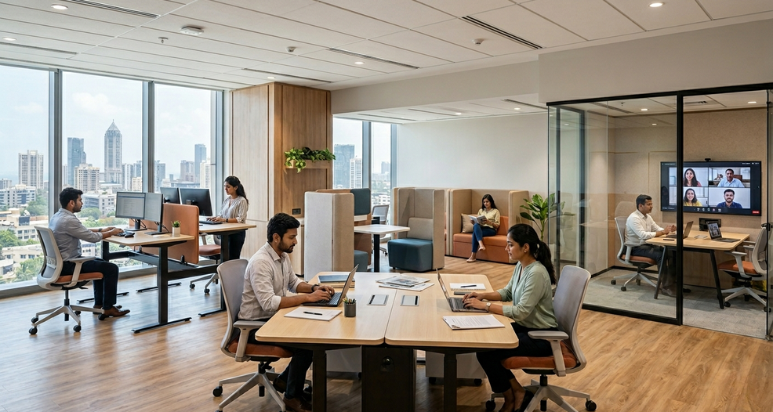
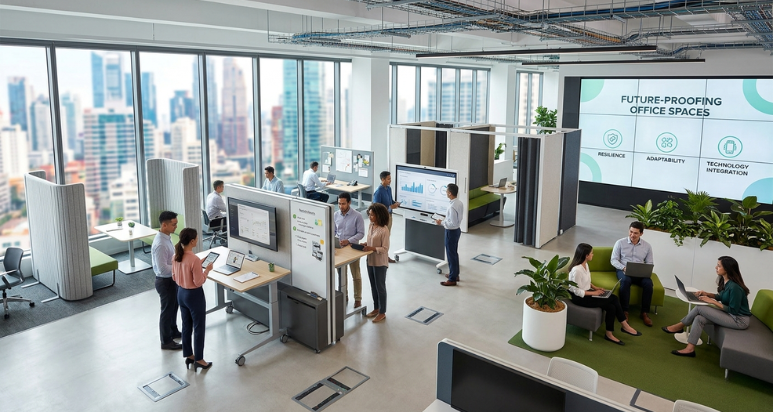
Future-proofing office spaces is about designing workplaces that are resilient to change. It’s no longer enough to create a visually appealing office; companies need spaces that can adapt to emerging technologies, evolving work styles, and employee needs.
A future-proof office minimises disruptions, reduces the need for frequent renovations, and allows organisations to scale seamlessly. In short, it’s an investment in long-term productivity, efficiency, and employee satisfaction.
The Role of Technology in Future-Proof Offices
Technology is at the heart of future-proofing office spaces. Smart offices are no longer a futuristic concept; they’re a reality. Integrating IoT devices, AI-driven automation, and energy management systems can make your office smarter, more efficient, and more adaptable.
For example, smart lighting and climate control systems automatically adjust based on occupancy, saving energy while enhancing comfort. Cloud-based collaboration tools and tech-enabled meeting rooms support hybrid work seamlessly. Offices that invest in scalable tech infrastructure today will be ready for tomorrow’s innovations without major overhauls.
Designing for Flexibility
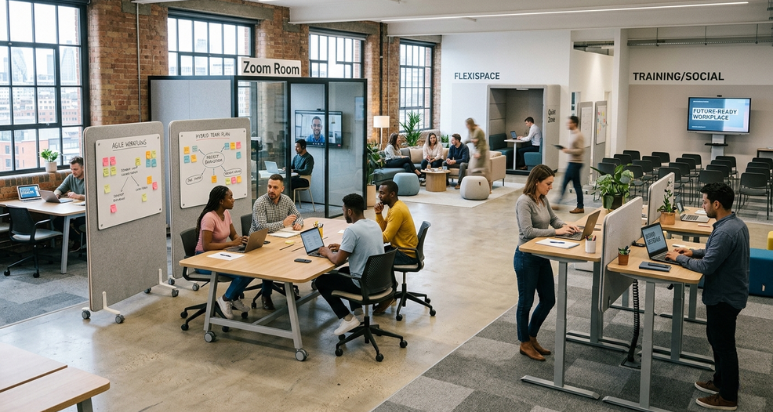
One of the key pillars of future-proofing office spaces is flexibility. Workplaces must cater to a variety of work styles, from collaborative brainstorming to focused solo tasks.
Modular furniture and adaptable layouts make it easy to reconfigure spaces as business needs change. Multi-purpose areas can be used for meetings, training, or social gatherings. By prioritising flexible workspaces, companies ensure that their offices remain functional and relevant for years to come.
A flexible office also supports hybrid work arrangements, allowing employees to switch between remote and in-office work without disruption. This not only enhances productivity but also improves employee satisfaction and retention.
Innovative Design Trends in Commercial Fit-Outs
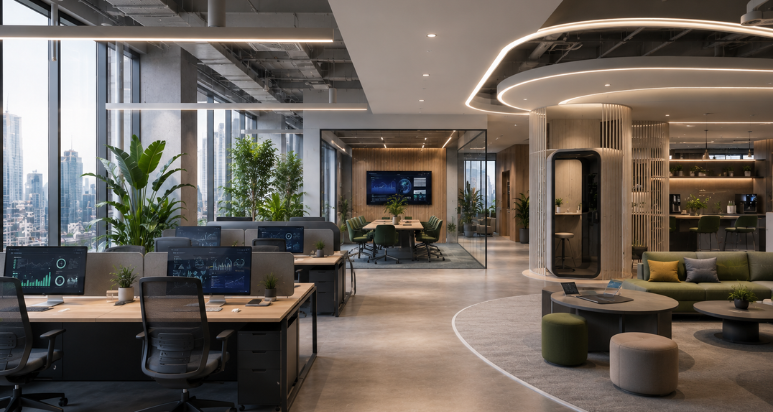
The right design is more than just aesthetics; it’s about creating a workspace that fosters wellbeing, creativity, and efficiency. Some emerging trends in commercial fit-outs include:
- Biophilic design: Integrating plants, natural light, and green elements to boost mental health and productivity.
- Sustainable materials: Using eco-friendly materials and energy-efficient systems to reduce environmental impact.
- Ergonomic furniture: Prioritising comfort to minimise strain and improve employee performance.
- Human-centred layouts: Designing spaces that cater to diverse employee needs, from quiet zones to collaborative hubs.
These design elements not only enhance the office experience but also contribute to long-term future-proofing by creating adaptable, sustainable, and attractive workplaces.
Cost vs. Value: Investing in the Future
Many organisations hesitate to invest in future-proofing because of upfront costs. However, the long-term benefits far outweigh the initial expense. A tech-enabled, flexible, and well-designed office reduces the need for constant renovations, minimises downtime, and boosts employee productivity.
Studies show that companies with modern, adaptable offices experience higher employee satisfaction and retention, which translates into significant cost savings over time. In essence, future-proofing office spaces is not just an expense; it’s a strategic investment in growth and efficiency.
Steps to Implement Future-Proofing in Your Office
- Assess Current Needs and Forecast Trends: Analyse your current workspace, understand employee workflows, and anticipate future requirements.
- Collaborate with Experts: Work with designers, architects, and IT specialists to ensure your office integrates the latest tech and flexible solutions.
- Adopt a Phased Approach: Implement changes gradually to minimise disruption and allow adjustments based on feedback.
- Prioritise Scalability: Choose modular furniture, adaptable layouts, and scalable technology systems.
- Monitor and Evolve: Continuously evaluate office performance and make incremental upgrades to stay ahead of trends.
By following these steps, companies can ensure that their offices remain relevant, functional, and ready for the future.
Conclusion
Future-proofing office spaces is no longer optional; it’s essential for companies aiming to remain competitive in a rapidly changing world. By integrating technology, prioritising flexibility, and embracing innovative design, businesses can create offices that are adaptable, efficient, and inspiring.
Investing in your office today ensures that it remains relevant for years to come, improving employee satisfaction, operational efficiency, and long-term ROI. Take the first step toward transformation. Let’s create a workspace with Dreamspace India that evolves with your business.