


An office can have the right layout, good furniture and a strong brand and still feel wrong. More often than not, the reason is office lighting design, or the lack of it.
Glare on screens. Meeting rooms where everyone looks washed out on video. A breakout zone lit like an operation theatre, so nobody uses it. These aren’t furniture problems. Their lighting decisions were made too late.
Good office lighting design starts with one question: what does each zone need to do? The fixtures come after.
The Three Layers of Office Lighting
- Ambient lighting gives even, overall light across the space.
- Task lighting adds focused light where work happens: desks, counters, and meeting tables.
- Accent lighting highlights brand walls, signage and architectural features.
Most lighting complaints come from relying on one layer to do the job of all three.
Recommended Lux Levels for Office Lighting by Zone
The recommended lux level for office workstations is around 500 lux, with meeting rooms also at 500 lux, reception at 300 lux, breakout areas at 200–300 lux and corridors at 100 lux. Work areas are best lit at a neutral 4000K colour temperature, and breakout and cafeteria zones at a warmer 2700–3000K.
Choose fixtures with a colour rendering index (CRI) of 80 or higher so skin tones, materials and brand colours look accurate.
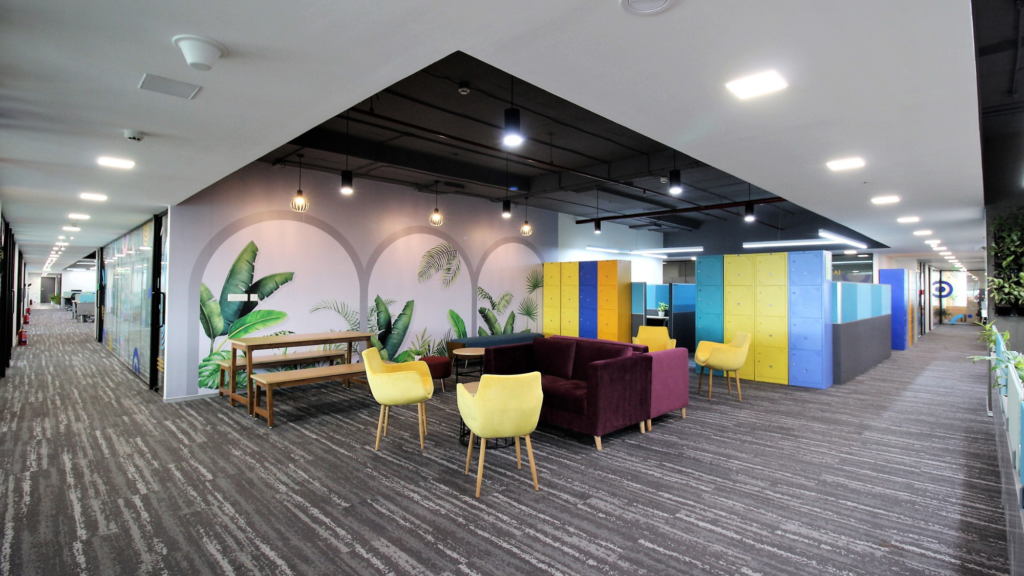
How Office Lighting Design Changes Across Zones
Workstations
Comfort beats brightness. Place desks so screens sit at right angles to windows, and use low-glare fixtures above workstation clusters. Plan lighting with the desk layout, never after it.
Conference Room and Meeting Room Lighting
Every meeting room is now a video studio. Overhead downlights cast shadows under eyes, and a bright window behind the speaker turns them into a silhouette. Light faces evenly from the front and give the room separate settings for presentations and video calls.
Reception
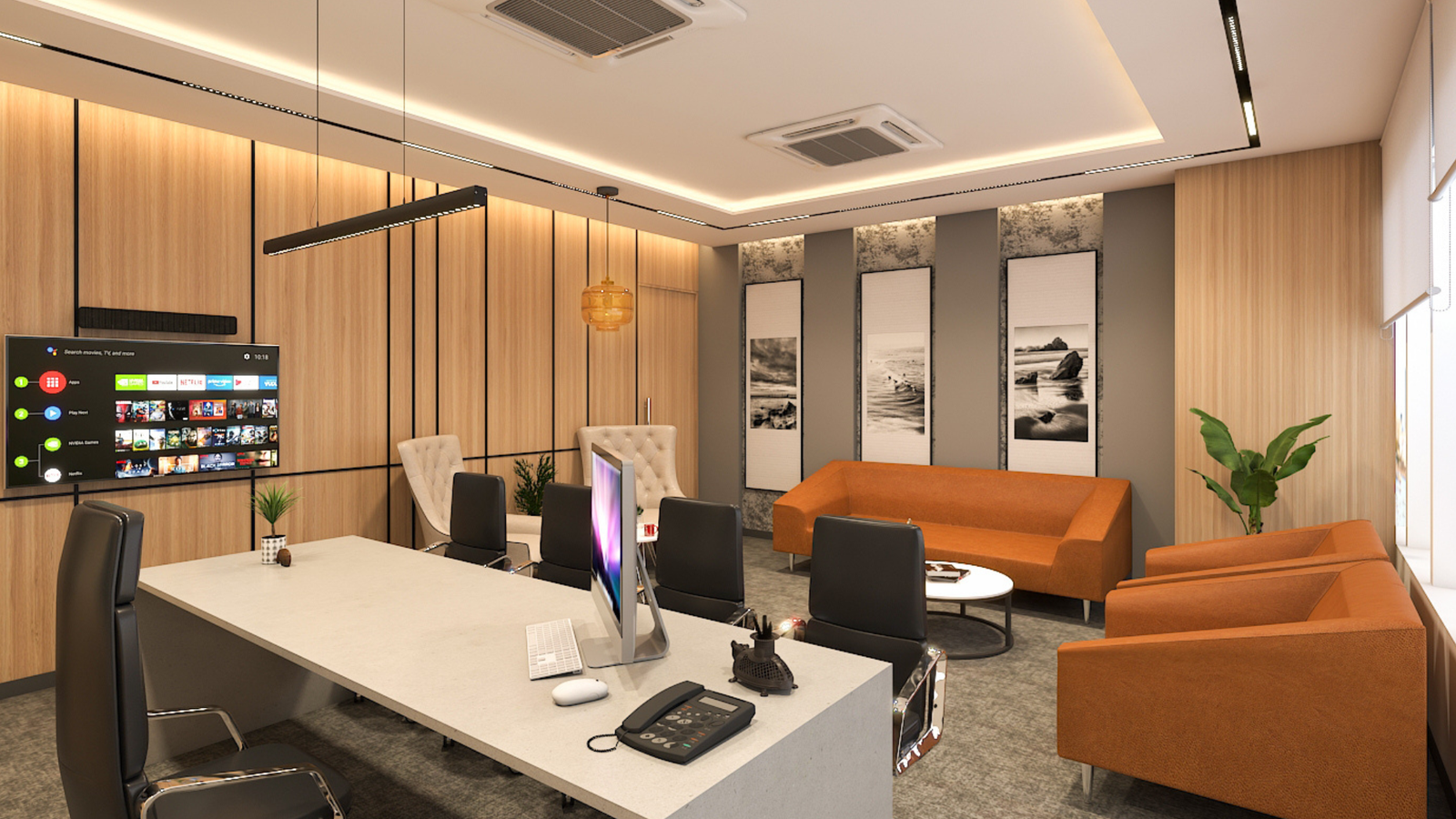
The first thing a client sees. Ambient light keeps it welcoming, and accent lighting on the logo wall carries the brand. In corporate interior design, reception lighting should feel like part of the office’s identity.
Breakout Areas
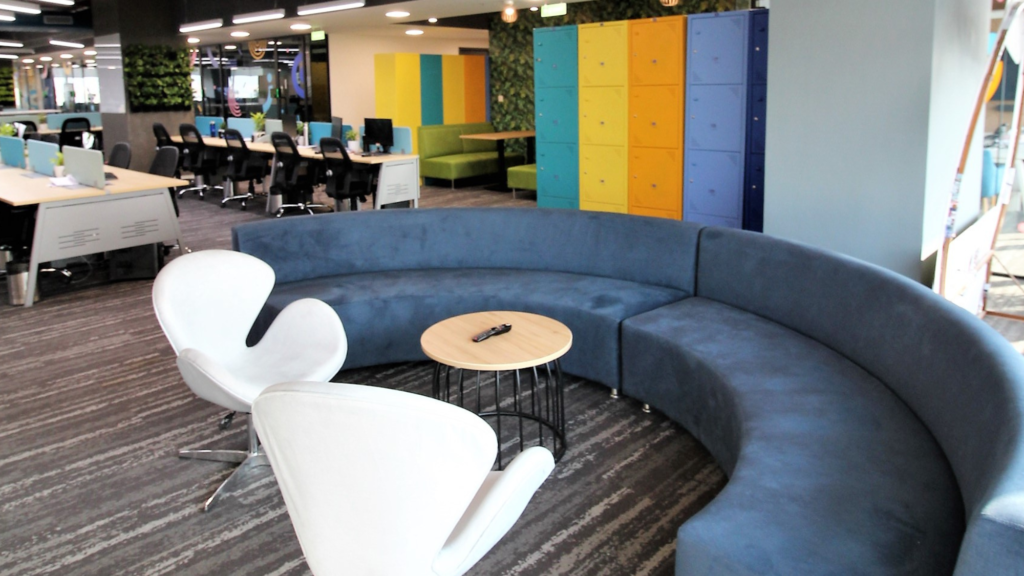
Warmer, lower light signals “step away from your desk”. Light a breakout zone like the workstations, and it gets used like one, or not at all.
Cafeteria and Pantry
Practical light for serving, relaxed light for eating. Pendants over tables separate dining zones from service counters.
What Makes Office Lighting in Mumbai Different
The monsoon. For three to four months, overcast skies cut daylight sharply. A design that relies on windows in April leaves teams in dim light from June to September.
Glass towers and west-facing glare. Many commercial buildings in BKC, Lower Parel, Andheri and Thane have full-glass facades. Afternoon sun brings glare on screens and heat gain that pushes up AC load.
Deep floor plates. Core zones far from windows need their own lighting plan, not the same treatment as the perimeter.
Energy costs and compliance. India’s Energy Conservation Building Code sets lighting power limits and control requirements for commercial buildings.
The goal is balance: use daylight where it helps, control it where it doesn’t, and let artificial lighting fill the gaps automatically.
Human-Centric Lighting: Where Office Lighting Is Heading
Human-centric (or tunable) lighting changes colour temperature through the day: cooler and brighter in the morning, warmer and softer in the late afternoon. It follows the body’s natural rhythm instead of holding the same light from 9 to 7.
For companies focused on wellbeing and talent retention, it’s becoming part of the workplace experience. It’s also far easier to add at the fit-out stage than to retrofit.
Lighting Controls: Where the Real Savings Come From
- Occupancy sensors switch lights off in empty rooms, cabins and washrooms.
- Daylight sensors dim perimeter fixtures when natural light is strong enough.
- Zoned controls let each area be adjusted separately.
- Scene settings give meeting rooms preset modes for presenting and video calls.
Fixtures determine how an office looks. Controls determine what it costs to run, and they’re one of the biggest levers in a sustainable office fit-out.
Questions to Ask Your Office Interior Designer About Lighting
- How will the lighting perform during the monsoon?
- What lux levels and colour temperatures are you designing for each zone?
- How will you control glare on screens?
- How will meeting rooms perform on video calls?
- What controls are included, and what will they save on energy?
If the answers are vague, lighting is being treated as an afterthought.
How Dreamspace India Approaches Office Lighting
As office interior designers in Mumbai, we treat lighting as part of the design brief from the first layout, not a line item added at the end.
We map every zone by how it will be used, set lighting targets for each, and coordinate fixtures with the ceiling, HVAC and furniture layout so nothing gets shifted on site. Glare and building orientation are assessed before workstations are placed, and controls are part of core scope.
As a design and build firm, we see the plan through to execution, so the lighting that gets installed is the lighting that was designed.
FAQs
What is the recommended lux level for an office?
Around 500 lux for workstations and meeting rooms, 300 lux for reception, 200–300 lux for breakout areas and 100 lux for corridors. Exact levels depend on the type of work and the space.
Does good lighting design cost significantly more?
Not necessarily. Good design puts the right fixture in the right place instead of adding more fixtures. With controls and efficient LEDs, it usually costs less to run over the lease.
Can existing office lighting be improved without a full renovation?
Often, yes. Replacing fixtures, adding task lighting, repositioning lights or adding controls can make a real difference. It depends on the existing ceiling, electrical setup and layout, and a site assessment will tell you whether targeted changes are enough.
What lighting is best for video calls?
Even, frontal light on faces, with no strong light source behind the speaker. Avoid relying only on overhead downlights, which cast shadows under the eyes.
What colour temperature is best for an office?
Neutral white (around 4000K) for workstations and meeting rooms. Warmer white (2700–3000K) for breakout areas and cafeterias.
Should every office area have the same brightness?
No. Workstations need around 500 lux, breakout areas far less, and corridors less again. Uniform brightness everywhere wastes energy and makes informal spaces feel like work zones.
Planning a New Office or Upgrading Your Current One?
Good office lighting design is built around how your team actually works. Talk to Dreamspace India about the lighting plan for your next office.